Krishnakant Agrawal

Krishnakant Agrawal

PhD, IISc Bangalore

Associate Professor, IIT Delhi

Profile

Associate Professor at the Department of Mechanical Engineering, Indian Institute of Technology Delhi.

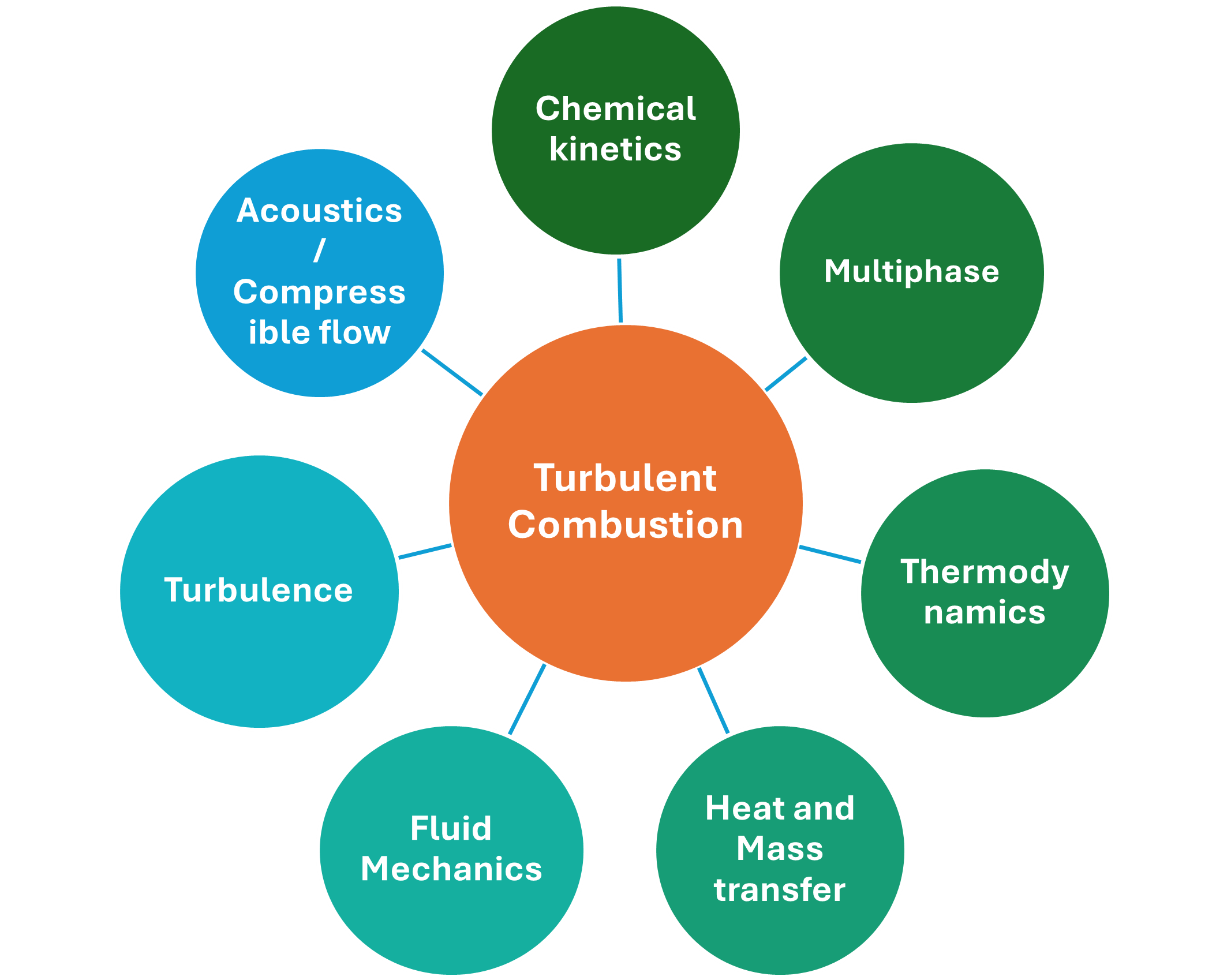
Research Interests: Turbulent reacting flows, Aero-acoustics, Combustion Dynamics, Furnace Heat Transfer.
Research Activities

Combustion & Pollutant Reduction
Turbulent Reacting Flow

Focus on reducing pollutant emissions and increasing fuel utilization efficiency. Research includes industrial combustion studies, turbulent lean premixed combustion, and low temperature combustion strategies relevant to small scale Indian industries and rural applications.

Combustion Dynamics
Turbulent Reacting Flow
Krishnakant Agrawal

Focus on reducing pollutant emissions and increasing fuel utilization efficiency. Research includes industrial combustion studies, turbulent lean premixed combustion, and low temperature combustion strategies relevant to small scale Indian industries and rural applications.

Computational Design & Simulation
Fig 2.1 OpenFOAM Model
Fig 2.2 COMSOL Heat Analysis
Fig 2.1 OpenFOAM Model
Fig 2.2 COMSOL Heat Analysis

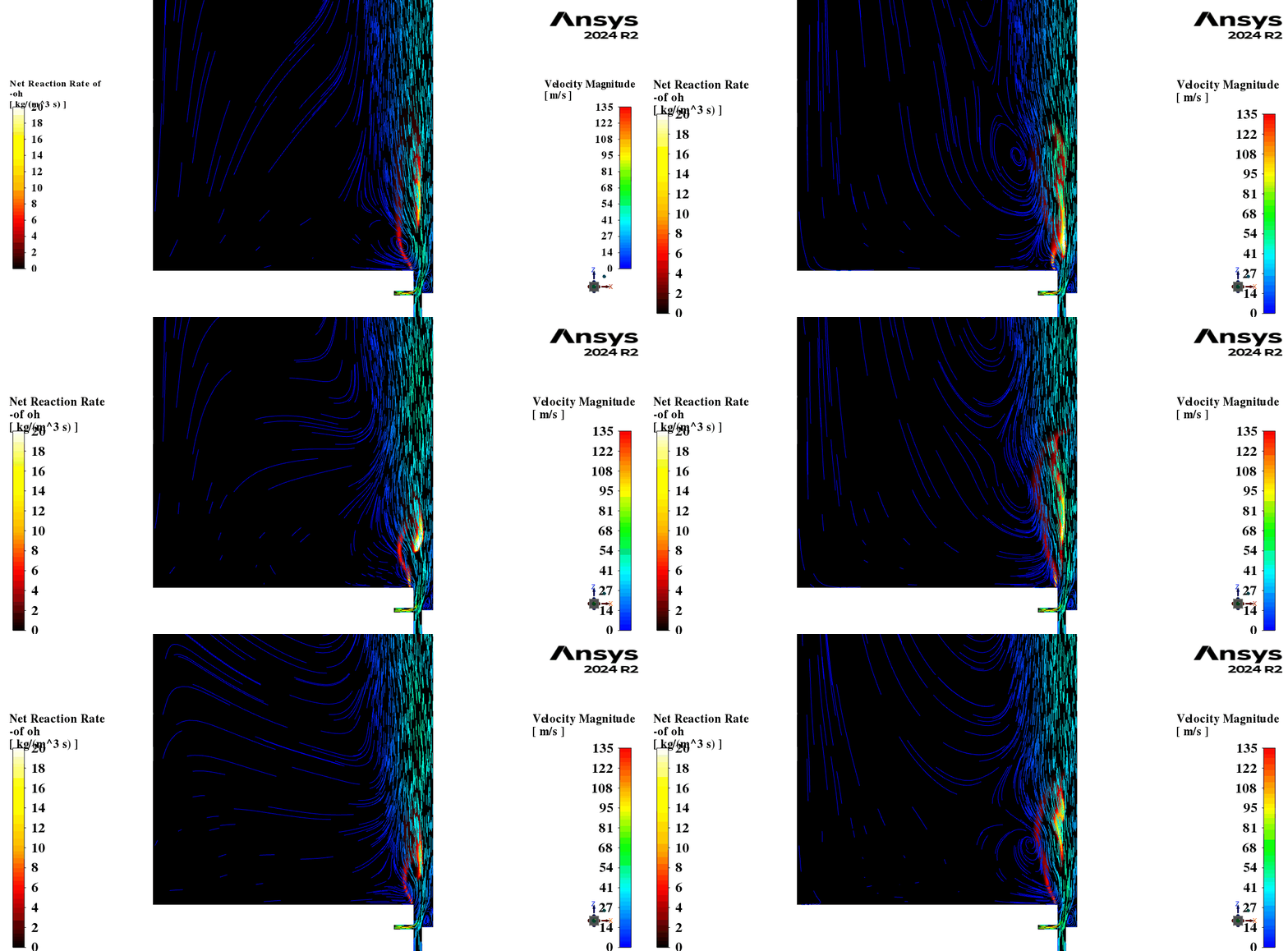
Conceptual design level studies using simulation techniques. Software tools such as OpenFOAM, COMSOL, ANSYS-FLUENT, and CONVERGE are used to model experiments in turbulent flames and heat dispersion.

Sponsored Projects

Completed / Ongoing
Proj_1

Combustion Systems in MSMEs

Interventions to Improve Performance of Combustion Systems. Sponsored by PCRA/CHT, Ministry of Petroleum and Natural Gas.

Proj_2

UNIDO Furnace Development

Improved Furnaces for Handtool Clusters in Jalandhar and Nagaur. Sponsored by United Nations Industrial Development Organization, Austria.

Publications & Patents

Show All [+]
International Journals
  • Pandey M., Agrawal K., Ray A. (2026), Intrinsically unstable laminar premixed H2/air flames at low temperature, Combustion and Flame, 285, 114772.
  • Pandey M., Agrawal K., Ray A. (2026), Numerical studies on cellular and pulsating instabilities in hydrogen flames, Combustion and Flame, 285, 114763.
  • Pandey M., Agrawal K., Ray A. (2025), Numerical studies on intrinsically unstable H2/CO2 flames, Combustion and Flame, 279, 114307.
  • Mishra A., Agrawal K., & Kumar M. (2025), Flame Acceleration in Partially Confined Geometry, Flow Turbulence and Combustion, Jun 17:1-30.
  • Kumar A., Agarwal K., et al. (2025), Performance Enhancement of a Jaggery Production Unit, Int. Comm. in Heat and Mass Transfer.
  • Tiwari A. K., Agrawal K. (2025), Splash fill performance in counter-flow cooling towers, Int. Comm. in Heat and Mass Transfer, Vol 169.
  • Mishra A., Agrawal K., & Kumar M. (2024), Flame Propagation in Obstructed Chamber, JFFHMT, Vol 11, pp. 177-186.
  • Kumar A., Agrawal K. K., Tyagi S. K. (2023), Exergetic sustainability of a traditional four-pan jaggery unit, Journal of Cleaner Production, Vol 413.
Prior to joining IIT Delhi (Before May 2018)
  • Agarwal, K. K. and Ravikrishna, R. V. (2012), Validation of a Modified Eddy Dissipation Concept Model, Combustion Science & Technology, 184(2), pp. 151-164.
  • Agarwal, K. K. and Ravikrishna, R. V. (2011), Experimental and Numerical Studies in a Compact Trapped Vortex Combustor, Combustion Science & Technology, 183(12), pp. 1308-1327.
  • Agarwal, K. K., Krishna, S., and Ravikrishna, R.V. (2013), Mixing Enhancment in Compact Trapped Vortex Combustors, Combustion Science & Technology, 185(3), pp. 363-378.
  • Agarwal, K. K., and Ravikrishna, R. V. (2011), Flow-Acoustic Characterization of a Cavity-based Combustor Configuration, Defence Science Journal, 61(6), pp. 523-528.
Patents
  • Agarwal K.K., COOLING SYSTEM & METHOD FOR TURBINE SYSTEM. US Patent: 20130298564, Owner: GE-POWER, Nov 2013.
  • Agarwal K. K., et al., FLEXIBLE PIPE BODY & METHOD OF PROVIDING THE SAME. EU Patent: WO2014023516 A1, US patent: 20150219253, GE-WELLSTREAM, Feb 2014.
  • Agarwal K. K., et al., FLEXIBLE PIPE BODY & METHOD OF PROVIDING THE SAME: Part 2. EU Patent: WO2014023515 A1, US patent: 20150167867, Owner: GE-WELLSTREAM, Feb 2014.
  • Gubba S. R., Agarwal K. K., et al., INJECTOR DESIGN FOR LOW-EMISSIONS IN AXIAL FUEL STAGING. US20180328587A1, EP3401602B1 (GE Co.), Granted 2021.
International Conference Presentations
  • Pandey M., Agrawal K., Ray A. (2025), Propagation of hydrogen air flames at cryogenic temperature, 12th European Combustion Meeting (ECM), Edinburgh, UK.
  • Lamba S., Agrawal K. (2024), Flamelet calculation methods in turbulent flame models, 19th Int. Conf. on Numerical Combustion, Kyoto, Japan.
  • Pandey M., Agrawal K. (2024), Ozone Addition on Extinction limits of Ammonia/Hydrogen/Air Flames, 19th Int. Conf. on Numerical Combustion, Kyoto, Japan.
  • Prior to May 2018:
  • Agarwal, K. K. and Gori S. (2014), Effect of Compressor Discharge Casing Geometry on Exit Temp Profiles, ASME Turbo Expo-2014, Dusseldorf, Germany.
  • Agarwal, K. K., et al. (2014), Meshing Guidelines for Large Eddy Simulations, ASME Turbo Expo-2014, Dusseldorf, Germany.
  • Agarwal, K. K., and Ravikrishna, R. V. (2009), Unsteady reacting flow study of a Trapped Vortex Combustor, 7th Asia Pacific Conf. on Combustion, Taipei, Taiwan.
Technical Reports to Government Organizations
  • Agrawal K., et al. (2024), Combustion Systems in MSMEs, PCRA and CHT, Govt. of India.
  • Agrawal K., et al. (2022), Improved Furnaces for Hand-tool Clusters, UNIDO Austria & BEE, Govt. of India.
  • Agrawal K., et al. (2022), Dispersion of R-290 Refrigerant, BIS and MoEF&CC, Govt. of India.
  • Jain A., Agrawal K., et al. (2021), Performance Audit of Delhi Mass Rapid Transit System, Comptroller and Auditor General (CAG) of India.

Research Team

PhD Candidates (Ongoing)
Turbulent Reacting Flow

Vipin Kakkar

Ongoing Researcher

"Design and Testing of emerging industrial burner concepts"

My research focuses on flame stabilization of premixed fuel air mixtures from high-velocity, small diameter jets under turbulent flow conditions. Using CFD simulations alongside experimental observations, the study analyzes how jet velocity, Reynolds number, and equivalence ratio affect stability, focusing on recirculation zones and reaction zone dynamics. The work is further extended to syngas (H2/CO) to examine how fuel composition influences flame stability under high flow conditions.

Turbulent Reacting Flow

Mayank Pandey

Ongoing Researcher

"Study of Intrinsic Flame Instabilities"

His work focuses on exploring intrinsic instabilities inherent to premixed flame fronts, namely Darrieus-Landau, cellular, and pulsating instabilities, as well as Rayleigh-Taylor instabilities in slowly propagating flames. He is also studying triple flames in mixing layers and explosion limits in fuel/oxidizer systems.

Turbulent Reacting Flow

Sourov Ghosh

Ongoing Researcher

"Combustion Dynamics of hydrogen Enriched fuel in a Micromix, Multi-nozzle Burner"

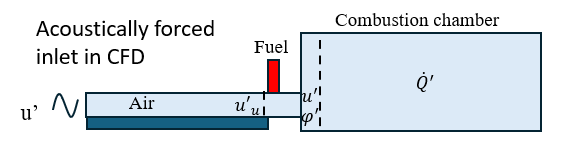
My research focuses on thermoacoustic instability (TI) in a micromix burner configuration. In addition to its advantages such as low NOx emissions, particularly for high hydrogen content fuels the micromix flame also presents distinct stability challenges. It exhibits unique thermoacoustic characteristics governed by periodic vortex shedding, fuel air mixing, fuel composition, combustion mode, and burner geometry. I investigate the coupling between unsteady heat release rate and the acoustic field under external forcing conditions, both experimentally and numerically. Experimentally, I examine differences in TI behavior across combustion modes partially premixed and fully premixed micromix flames and compare them with a swirl stabilized flame to identify the underlying mechanisms. Numerical simulations under matching conditions provide detailed insights into the flow field, mixing, and turbulence combustion interactions, which are essential for predicting and mitigating TI during the burner design phase.

Turbulent Reacting Flow

Kanika Thakur

Ongoing Researcher

"Development of LES sub-grid scale model for combustion mixtures with thermodiffusive instabilities"

The roles of flame curvature, strain rate, and thermo-diffusive instabilities at sub-grid scales requires modeling. Although DNS captures detailed hydrogen flame physics, it is computationally expensive, while LES resolves only large scales and requires accurate sub-grid modeling. For hydrogen flames, where essential physics occurs at small scales, these insights have not been effectively translated into reduced-order models. Moreover, existing data-driven approaches lack physical interpretability and generalizability. The work aims to extract key physics from DNS and develop validated, physics-guided reduced-order models.

M.Tech. (Completed)

YearNameFocus
2021Jugal PathakNaturallly aspirated burners
2023Rohit MeenaTurbulent flame test rig
2021Himanshu LalReduced order thermo models

B.Tech. (Projects)

YearNameTopic
2018Rajat KharbandaSpray injection in RCCI
2019Swapnesh AgrawalForging Furnaces Design
2022Ayush TanwarIIT Delhi Data Center Analysis

Lab Alumni & Completed Research

Sandeep Lamba (PhD, 2026): CO production in unsteady flame scenario using OpenFOAM.

Alok Kumar (PhD, 2025): Biomass pellets based heating systems for Jaggery making.

Amit Sharma (M.S. Research, 2022): Numerical Studies on Combustion Dynamics due to Liquid Fuel Droplets in Swirling Flame.

B.Tech Alumni: Rohit Meena (2019), Priyadarshan Jawanjal (2019), Saurabh Dhabu (2019), Anmol (2020), Vijay Kumar Meena (2020), Jatin Singh (2022), Manisha Verma (2022).

Teaching

Undergraduate Core
  • MCL241: Energy Systems and Technologies 3-0.5-1
  • MCL141: Thermal Sc. for Manufacturing 3-1-0
  • MCP301: Mechanical Engineering Lab - I 0-0-4
  • MCP401: Mechanical Engineering Lab - II 0-0-4
  • AENL210: Thermodynamics
    IIT Delhi Abu Dhabi
    3-1-0
  • AENL200: Conventional Energy Technologies
    IIT Delhi Abu Dhabi
    3-1-0
Undergraduate Elective
  • MCL345: Reciprocating IC Engines 3-0-2
  • MCL321: Automotive Systems 3-0-2
  • MCL343: Introduction to Combustion 3-0-0
Postgraduate Core
  • MCL705: Experimental Methods 3-0-2
Postgraduate Elective
  • MCL818: Heating, Ventilating and AC 3-0-2
  • MCL721: Automotive Prime Movers 3-0-2

Contact.

Indian Institute of Technology Delhi

Hauz Khas, New Delhi 110016

kkant@mech.iitd.ac.in

IITD

Please send research inquiries and collaboration proposals via the institutional email address provided.

Internship Applications

UG students who have completed 3 years of engineering education and able to provide full-time commitment for more than 3 months should only email.